
Chels
I’ve not been doing great this week. But, it’s Shakespeare week, and the show must go on. Quite a few of Shakespeare’s plays deal with madness, and at a time where mental illness was less understood than today (complex mental illnesses are all branded as madness), his ‘mad’ characters are still sympathetic – they are victims of their anguish, and, as a result, often victims of the many deaths in his tragedies.
Let’s start with the freshest in my mind, and the cause of my own anguish, in a way (the mark for my Shakespeare model essay almost pulled my overall grade down a classification and put a lot of pressure on the dissertation, but I’m over it, clearly).
Hamlet
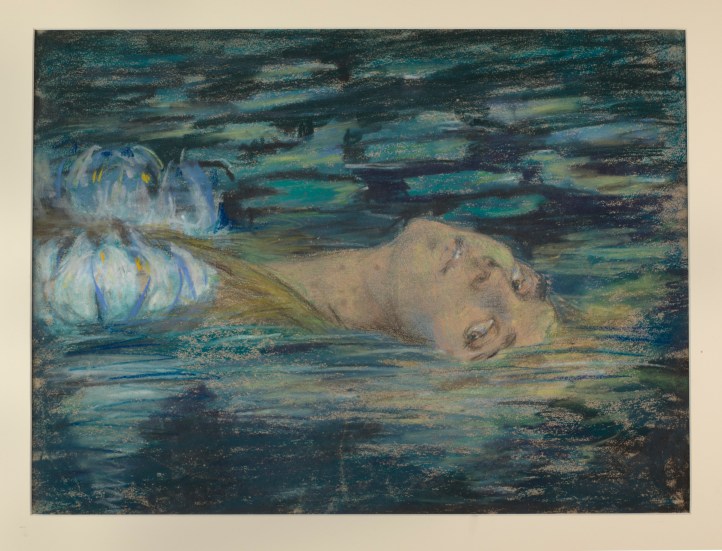
Hamlet is particularly interesting in terms of ‘madness’, because both Hamlet and Ophelia suffer. Sort of. Hamlet feigns madness in order to enact his revenge on Claudius for killing his brother, Hamlet’s father. However, the act of revenge against Claudius is spurred on by Hamlet’s grief, and I’d argue, it’s a pretty intense grief, given the lengths he is prepared to go. Many people argue that Hamlet’s grief becomes a sort of permanent state of melancholia.
It’s hard to say for sure if Hamlet is really ‘mad’, because he is conscious of his motives and actions, and deliberately acts otherwise, but regardless of this, he is consumed by grief and thoughts of revenge, almost to the point of obsession.
Ophelia, on the other hand, is generally accepted to be really ‘mad’. (Although, Claire McCarthy’s Ophelia (2018) has a really great portrayal of Ophelia feigning madness, just like Hamlet). I have a lot to say on the topic of Ophelia and mental illness, possibly too much, but I’ll try and be brief.
Generally, people consider Hamlet to have ‘driven Ophelia to madness.’ While some do consider the death of her own father, it’s alarmingly less so than those who believe Hamlet is really mad due to his grief. Whatever, I guess women can only go insane because a man rejected her …
Ophelia ultimately is a woman who does not understand her place in the world, she has very little agency and willingly obeys her father. Her father urges her to keep her virginity, and Hamlet implies she belongs in a brothel, and on top of all of the individual struggles she faces, she is ultimately a woman in the Early Modern period, which wasn’t exactly the peak of women’s freedom. Ophelia’s grief is complex. She loses her father, and in doing so, she loses his oppressive control – however, she hasn’t lived without that control and her sense of self is called into question.
Ophelia is ultimately driven to suicide. Although, this happens off screen, and is announced by Gertrude. There’s no actual proof that she’s dead, nor any that she took her own life, and there are so many adaptations and retellings that really lean into this idea. It’s comforting to think that Ophelia escaped Denmark, and got a chance to live outside of her family’s oppressive rule, and even more comforting to think that Gertrude helped her to accomplish this.
Othello
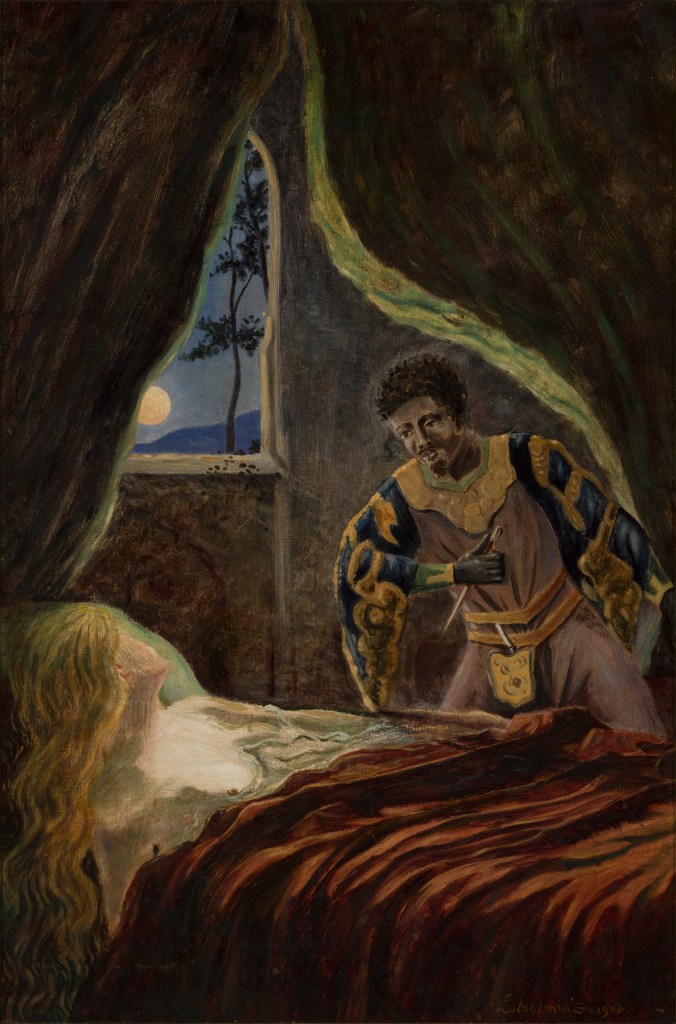
Othello is driven to madness by Iago, who plants seeds of doubt in his head of his wife’s fidelity. The psychological manipulation causes a decline in Othello’s mental health leading to psychosis. Many anxiety based disorders are fueled by doubt, and in Othello’s case, this doubt is orchestrated by Iago. Othello’s jealousy is so famous, in fact, that pathological jealousy, specifically delusions of infidelity, is known as Othello syndrome. Symptoms associated with Othello syndrome are hostility, irritability, and aggression, all of which can be seen in Othello’s behaviour towards the climax of the play. It leads me to wonder if Shakespeare was aware of the condition (though presumably known by a different name) and deliberately depicted it through Othello, or if Othello’s ‘madness’ was completely invented, and aligns with the symptoms of the disorder by chance.
Macbeth
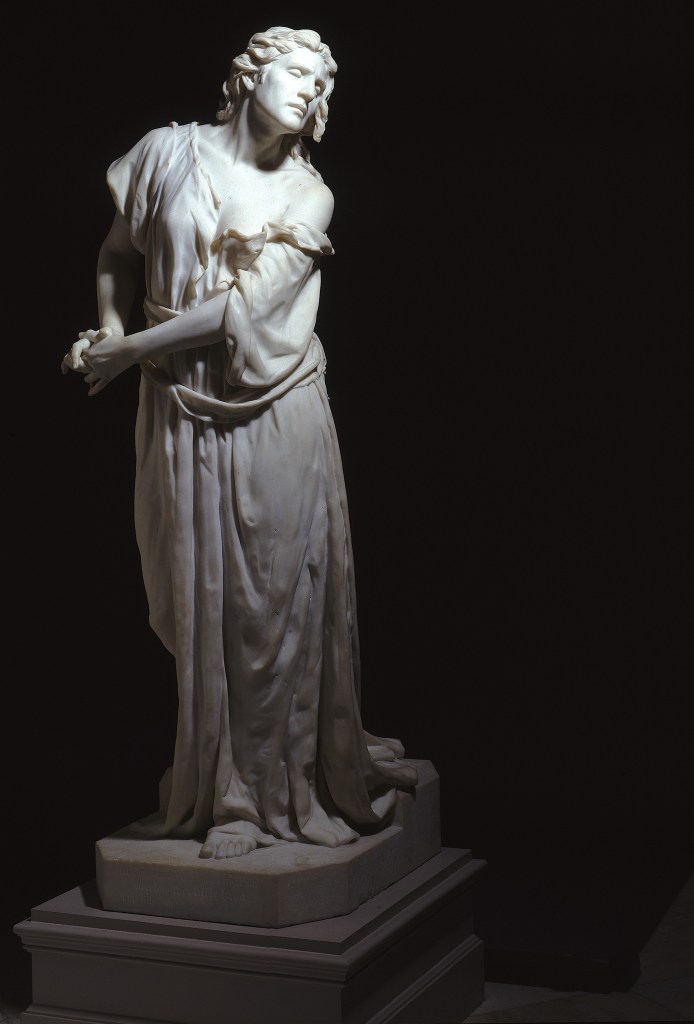
Lady Macbeth’s madness feels closest to my own struggles. Although, to be clear, I’ve never urged anyone to kill so that they can become king. When people think of OCD, and of Lady Macbeth, the first association is usually the excessive handwashing. But Lady Macbeth’s obsessive compulsive traits go deeper. She feels intense guilt and cannot shake her violent intrusive thoughts, and she desperately seeks reassurance, as well as offering it to herself and Macbeth. She excessively cleans blood from her hands and clothes, blood which is no longer there, but she can feel it. It’s a hard sensation to describe, the feeling that the dirt is still there, even when, by looking, it clearly is not. It’s a physical sensation, although completely psychosomatic. The one difference between Lady Macbeth and those of us who suffer with OCD is that Lady Macbeth’s guilt isn’t imagined – she really has committed terrible acts. Or, at least, pressured her husband to do so.
 Nonsense & Lit